![ProVisionSolar_White-Green[2]](https://provisionsolar.com/wp-content/uploads/2018/06/ProVisionSolar_White-Green2.png "ProVisionSolar_White-Green[2]")
Choosing a West Hawaii solar company means choosing someone who understands a region that runs from sea-level resort communities at Waikoloa and Mauna Lani to breezy ranch country in Waimea and the old sugar towns of North Kohala. No single design fits all of it. Salt air corrodes hardware near the coast, wind loads climb on the Kohala slopes, homeowner associations in resort communities have their own review rules, and Waimea’s cooler, cloudier afternoons change production estimates. Add Hawaii County permitting and Hawaii Electric Light interconnection, and the value of an installer who works the west side every week becomes obvious. ProVision Solar has installed solar across the Big Island since 1998, and this guide is the checklist we hand West Hawaii homeowners, including the ones comparing us against other bids.
What Should a West Hawaii Solar Company Be Able to Prove?

A West Hawaii solar company should be able to prove four things before you sign anything: that it is licensed, that it has installed systems in your part of the region, that its warranties are in writing, and that its design accounts for your specific site. Licensing comes first. Every legitimate solar contractor in Hawaii holds a state contractor license you can look up on the Hawaii Department of Commerce and Consumer Affairs licensing site, and a salesperson who cannot produce a license number has told you everything you need to know. Local proof comes next: addresses and homeowners you can talk to in Waikoloa Village, Puako, Kawaihae, Waimea, or Hawi, not a portfolio of mainland rooftops.
The West Hawaii Solar Company Checklist
Put these five items at the top of your comparison sheet when evaluating any West Hawaii solar company:
- Active Hawaii contractor license and insurance: verified on the DCCA site, with proof of liability coverage
- Installations in your microclimate: coastal, resort, or upland, because each changes the equipment and the production estimate
- Three written warranties: equipment, performance, and workmanship, with clarity on who honors each
- Hawaii County permitting, HOA design review, and Hawaii Electric Light interconnection handled in-house: three queues where west side projects stall
- Corrosion- and wind-rated hardware specified in the quote: named racking, fasteners, and panel ratings, not just a price per watt
Why Does the West Side Demand Local Design Experience?
The west side demands local design experience because conditions change dramatically over a twenty-minute drive. Along the coast from Kailua-Kona to Kawaihae, salt-laden air attacks racking, fasteners, and connectors, so a system that will still be sound in year twenty needs marine-grade components and periodic inspection. On the Kohala slopes and around Waikoloa, sustained trade winds and gusts require racking engineered for higher loads and careful attachment to the roof structure. Up in Waimea, afternoon cloud and cooler temperatures produce a different annual output than Kailua-Kona, so an estimate that uses coastal sun hours will oversell an upland system. Resort communities layer on architectural review committees that may restrict panel placement, color, and visibility from the street.
The paperwork is local too. Hawaii County issues the building and electrical permits, and Hawaii Electric Light reviews every grid-tied system before it connects. Hawaii’s programs differ from the mainland’s, since the state closed Net Energy Metering to new applicants in October 2015, per the Hawaii Public Utilities Commission, so most new west side systems are designed around storage and self-consumption. A properly managed West Hawaii Solar project accounts for all of it, and you can see how ProVision Solar sequences each job from site visit to power-on on our Our Process page.
What Red Flags Should End the Conversation?
Four red flags show up repeatedly in Big Island solar complaints. Net metering promises top the list, because the program has been closed to new applicants since 2015 and any pitch built on full retail export credit is outdated or dishonest. Pressure tactics come next, especially a price that supposedly expires tonight; a confident company lets you sleep on the numbers. Third is vagueness about who performs the work, since some operations sell on the west side and subcontract installation to whoever is available. Fourth is a monthly payment quoted with no total system price behind it, which is how overpriced systems hide.
Hawaii’s electricity rates run roughly three times the national average, per the U.S. Energy Information Administration, and west side households cooling homes through long, sunny summers feel that more than most. Solar here is a strong investment at honest prices. A company that needs gimmicks to sell it is telling you something.
What Should You Ask Every Installer Before Signing?
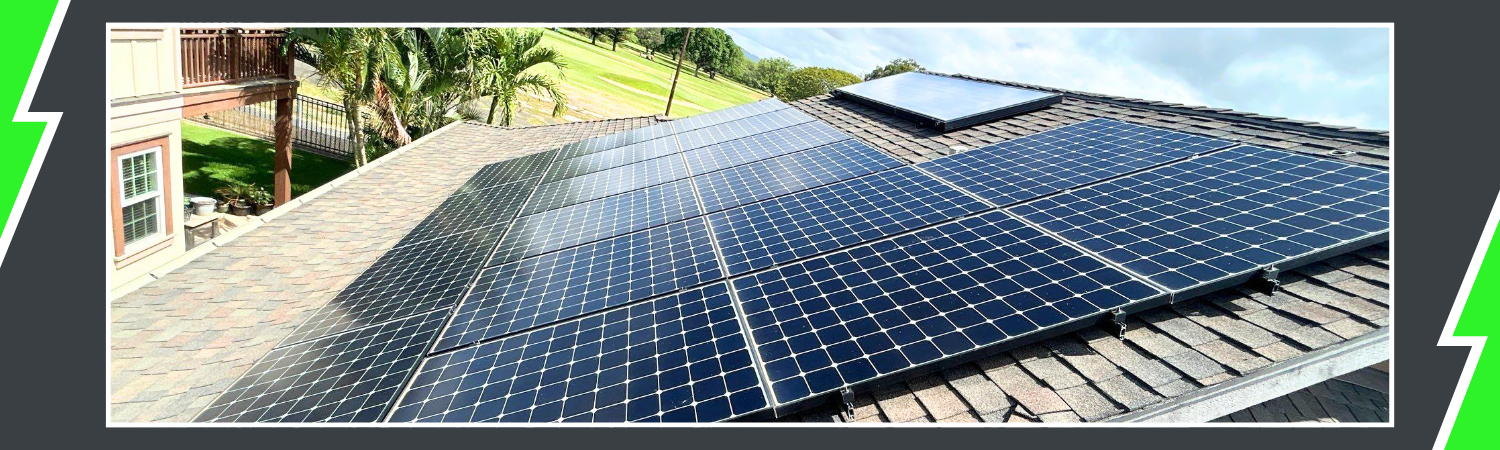
Ask every company on your shortlist the same seven questions and compare the answers side by side. What is your Hawaii contractor license number? Who performs the installation, your employees or subcontractors? How many systems have you installed between Kailua-Kona and Hawi, and can I speak with owners near me? What racking and fasteners are you specifying for salt and wind exposure? Who handles the Hawaii County permit, any HOA review, and the Hawaii Electric Light interconnection paperwork? What do your workmanship, equipment, and performance warranties each cover, and for how long? And what happens if my system underperforms your estimate?
Panels commonly carry 25-year performance warranties, per EnergySage, but a warranty is only as good as the company still answering the phone in year fifteen. ProVision Solar has served the Big Island since 1998, and our West Hawaii Home Solar Installation team designs, installs, and services systems with our own crew. Contact Us Today and we will answer all seven questions before you ask.
Frequently Asked Questions
How do I verify a West Hawaii solar company’s license?
Search the company name or license number on the Hawaii Department of Commerce and Consumer Affairs professional licensing website. The record shows whether the contractor license is active and in good standing. Reputable installers volunteer their license number without being asked twice.
Do resort community HOAs allow rooftop solar in West Hawaii?
Generally yes, though many have architectural review requirements covering panel placement, color, and visibility. An installer experienced in Waikoloa, Mauna Lani, and similar communities knows how to design a compliant layout and submit the review package alongside the county permit.
Does salt air really shorten a solar system’s life on the Kohala coast?
It can if the hardware is not specified for it. Marine-grade racking, stainless fasteners, and sealed connectors resist coastal corrosion, and periodic checkups catch problems early. Coastal systems built with the right components perform for decades.
What is the biggest red flag when comparing West Hawaii solar quotes?
Net metering promises. Hawaii closed that program to new applicants in 2015, so any pitch assuming full retail credit for exported power is based on rules that no longer apply. Pressure tactics and quotes without an itemized system price are close behind.
Compare Us Anywhere on the West Side
Choosing a West Hawaii solar company comes down to asking the same questions of everyone and comparing the answers, and ProVision Solar welcomes the comparison. We have designed, installed, and serviced systems from Kailua-Kona to Waimea and North Kohala since 1998. Contact Us Today for a free assessment and see how our license, warranties, and west side experience stack up against any other bid on your kitchen table.
Information pertaining to laws, regulations, or incentives is accurate at the time of writing this content. However, regulations and systems can change at anytime.