![ProVisionSolar_White-Green[2]](https://provisionsolar.com/wp-content/uploads/2018/06/ProVisionSolar_White-Green2.png "ProVisionSolar_White-Green[2]")
How many solar panels do I need in Kona has the happiest answer on the Big Island: fewer than almost anywhere else, because the west side gets more usable sun than any other populated part of the island. That does not make the question simple. Kona homes run air conditioning that Hilo homes skip, rooftop heat trims panel output on the hottest afternoons, vog occasionally dims the sky, and a home at elevation in Holualoa or Kealakekua sees more afternoon cloud than one on the shoreline in Kailua-Kona. The math itself is simple once you know three numbers: your monthly usage, the sun hours your part of Kona actually receives, and how much power each panel produces. ProVision Solar has installed solar across the Big Island since 1998, and this guide walks through the calculation so you can sanity-check any quote.
How Many Solar Panels Do I Need in Kona for a Typical Home?
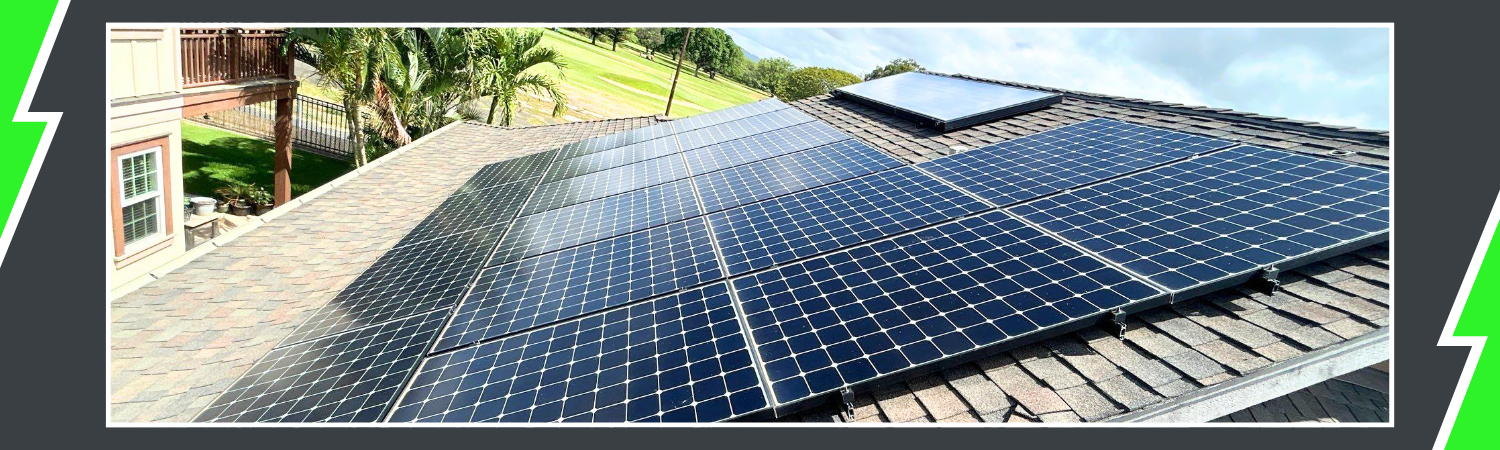
How many solar panels do I need in Kona comes down to a range of roughly 10 to 16 panels for a typical household, with homes that run air conditioning through the summer landing above that. Hawaii homes use less electricity than the national average, roughly 500 to 550 kilowatt-hours per month for a typical residential customer, per the U.S. Energy Information Administration, but Kona is the part of the Big Island where that average is least reliable. Air conditioning is one of the largest single electricity loads in any home that has it, per the U.S. Department of Energy, and a Kona home cooling several rooms through August can use double the statewide figure. Pool pumps and electric vehicle chargers add more.
The Math Behind How Many Solar Panels Do I Need in Kona
The calculation behind how many solar panels do I need in Kona takes four steps, and you can run it with your own Hawaii Electric Light bill:
- Daily usage: divide your monthly kilowatt-hours by 30. A 550 kWh month is about 18 kWh per day; a 900 kWh air-conditioned summer month is about 30
- Kona sun hours: the coast from Kailua-Kona to Keauhou and the Kohala shore averages roughly five and a half or more peak sun hours per day over a year; upslope neighborhoods in the coffee belt run closer to five because of afternoon cloud
- System size: divide daily usage by sun hours, then add about 20 percent for real-world losses from wiring, inverters, rooftop heat, and vog. 18 kWh divided by 5.5 hours, plus 20 percent, is roughly a 4 kW system; 30 kWh the same way is about 6.5 kW
- Panel count: divide system size by panel wattage. At 400 watts per panel, 4 kW is about 10 panels and 6.5 kW is about 16; higher-wattage panels reduce the count
Run a Hilo household with the same usage through four sun hours instead of five and a half and the count rises by roughly a third, which is why a Big Island quote should always say which side of the island its sun data came from.
What Kona-Specific Factors Change the Count?
Three Kona-specific factors move the number beyond the basic math. Heat is the first: solar panels lose a small amount of output for every degree they run above their rated temperature, and a dark roof in Kailua-Kona in August runs hot, so panel selection and ventilation under the array matter more here than in cooler areas. Vog is the second: volcanic haze drifting from Kilauea can reduce sunlight on some days, and an honest production estimate builds in that variability rather than quoting clear-sky numbers. Elevation is the third: homes up the slope in Holualoa, Kealakekua, and Captain Cook sit under the afternoon cloud that makes the coffee belt what it is, and their arrays produce less per panel than shoreline homes a few miles below. Roof orientation and shading add a fourth layer, since a west-facing roof captures the long Kona afternoon and a neighbor’s mango tree can shade an array for hours. Every Kona Home Solar Installation from ProVision Solar starts with a site visit that measures the actual roof, shading, and orientation and uses production data specific to your elevation and neighborhood.
Does a Battery Change the Panel Count?
Yes, and in Kona the battery is usually sized around the evening air conditioning. Hawaii closed its Net Energy Metering program to new applicants in October 2015, per the Hawaii Public Utilities Commission, so new systems earn less for exported power than they save by storing and using it at home. A Kona household that cools the house after sunset wants the array to produce enough surplus during the day to fill a battery for those hours, which means sizing somewhat above the daytime load. The battery itself is sized separately, based on which loads you want protected during an outage and how long the house runs the air conditioning after dark.
What If You Already Have Panels and Need More?

Many Kona homeowners installed solar years ago and have since added air conditioning, a pool, or an electric vehicle, and their panel count no longer keeps up. Expanding is common and usually simpler than the first installation, though it depends on your inverter’s remaining capacity and your current utility program, since adding capacity to an older Net Energy Metering system can affect that agreement. Our Kona Solar System Upgrades service evaluates your existing array, roof space, and interconnection before recommending how many panels to add and whether a battery belongs in the upgrade.
Whatever the count, Hawaii’s electricity rates run roughly three times the national average, per the U.S. Energy Information Administration, so each panel on a Kona roof offsets some of the most expensive residential power in the country, and it does so under some of the best sun in the state. Learn more on our Kona Solar page, or Contact Us Today for a free sizing assessment based on your actual bills.
Frequently Asked Questions
How many solar panels does an average Kona home need?
Most Kona homes need roughly 10 to 16 panels. A household using about 500 to 550 kilowatt-hours per month lands near 10 to 12 panels at 400 to 430 watts each, while a home running air conditioning through the summer may need 14 to 16 or more. Pools and electric vehicles push the count higher.
Do Kona homes need fewer panels than Hilo homes?
Yes, typically about a third fewer for the same usage. Kona’s coast averages five and a half or more peak sun hours per day versus roughly four in Hilo, so each Kona panel produces more over a year. Upslope Kona homes in the coffee belt fall between the two.
Does heat or vog reduce how much my Kona panels produce?
Both can. Panels lose a small amount of output as rooftop temperature climbs, and vog reduces sunlight on the days it settles over the west side. An experienced Kona installer accounts for both in the production estimate rather than quoting clear-sky numbers.
How many extra panels does air conditioning add in Kona?
One or two efficient mini-splits typically add three to five panels. Central air conditioning running through the summer can nearly double the system size compared with a similar household without cooling. Your hottest month’s bill gives the most useful number.
Get a Panel Count Built on Kona’s Real Sun and Your Real Bills
How many solar panels do I need in Kona has a precise answer once someone looks at twelve months of bills, your roof, your elevation, and the way your household cools. ProVision Solar has done that math on the west side since 1998, and we will show you the calculation, not just the number. Contact Us Today for a free assessment.
Information pertaining to laws, regulations, or incentives is accurate at the time of writing this content. However, regulations and systems can change at anytime.