
Adding solar panels to existing system arrays is one of the most common requests we get, and it is almost always triggered by the same thing: the household changed. An electric vehicle showed up in the driveway, an ADU went in out back, the kids moved home, or a heat pump replaced the old water heater. The array that covered the bill perfectly in 2018 now covers two thirds of it. The good news is that expanding is usually straightforward. The complications are rarely on the roof; they are in the inverter’s capacity and in how Hawaiian Electric treats your existing interconnection agreement. ProVision Solar has expanded island systems since 1998, including many originally installed by other companies.
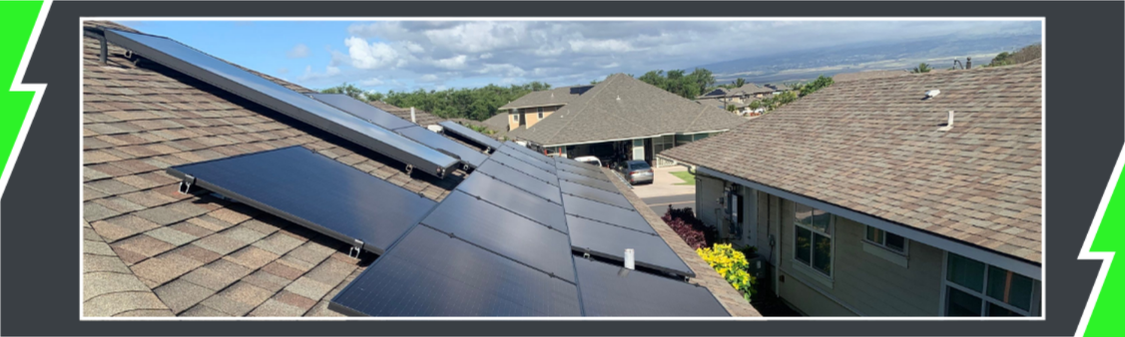
Adding Solar Panels to Existing System Arrays: Is Your Setup Ready?
Whether your setup is ready depends on four things, and only one of them involves roof space. The first is inverter headroom: a string inverter has a maximum DC input, and if the original design already sits near it, new panels require a new or additional inverter. Microinverter and optimizer systems are far easier, because each added panel brings its own conversion and the existing equipment is untouched. The second is electrical service capacity, since the main panel busbar and breaker arrangement have to accommodate the additional backfed current. The third is roof area with usable sun, accounting for trees and structures that have grown or gone up since the original install. The fourth is your utility program, which is the item most homeowners never think about and the one most likely to shape the design.
What to Check Before Adding Solar Panels to Existing System Equipment
Work through this list before anyone quotes you a price:
- Inverter type and headroom: string, microinverter, or optimizer, and how much DC capacity the existing inverter can still accept
- Existing interconnection program: legacy NEM, NEM Plus, Customer Grid Supply, Smart Renewable Energy Export, or Non-Export
- Main service panel capacity: bus rating, main breaker size, and available spaces for the new circuit
- Roof condition and remaining life: because the cheapest time to re-roof is before more panels go on, not after
- Current shading: a shade analysis redone today, not the one from the original proposal
- Actual usage: twelve months of recent bills, since the goal is sizing to the new load rather than to the old one
- Module compatibility: new panels rarely match old ones in wattage, so they typically need their own string or their own microinverters
What Happens to Your Hawaiian Electric Program When You Expand?
Expanding does not automatically cost you your legacy program, and this is the most important thing for long-tenured solar owners to understand. Hawaiian Electric’s NEM Plus lets existing Net Energy Metering customers “install new panels, battery storage or a combination of both” while keeping their current NEM status, provided the output of the addition is used entirely on site and does not export to the grid, per Hawaiian Electric. There are no program capacity limits or queues for NEM Plus, so there is no deadline pressure. A separate variant, NEM Plus Limited Export, allows export only when providing grid services and requires battery storage plus participation in a program such as Bring Your Own Device Plus. Either way a new application is required through Hawaiian Electric’s Customer Interconnection Tool, and any new capacity may be limited by the available capacity of your program. Homeowners without legacy NEM are working within the current Smart Renewable Energy programs, where Export and Non-Export options both exist and the right choice depends on your circuit and your evening usage.
Should You Add Panels, a Battery, or Both?
Add panels if you are short on generation, and add a battery if you are short on generation at the wrong time of day. Those are genuinely different problems. If your daytime production still exceeds daytime consumption but your evening bill is high, more panels under a non-export arrangement will produce midday energy you cannot use, while storage captures it. If your total annual production simply no longer covers your total annual usage, more panels are the answer. Most Hawaii households adding an EV or an ADU turn out to need both. The mechanical path matters here too. An AC-coupled battery, including the Tesla Powerwall 3, which stores 13.5 kilowatt-hours and delivers up to 11.5 kilowatts of continuous power per Tesla, connects on the AC side and leaves the original array and inverter completely alone. That is why a Tesla Powerwall Installation is frequently the simplest upgrade available to an owner of an older system, and it is the upgrade that also brings outage backup the original array never provided.

What Drives Most Hawaii Upgrades, and What Do They Cost?
Four changes drive most Hawaii solar expansions: an electric vehicle, an ADU or rental unit, a switch from gas to electric appliances, and a household that simply grew. Each adds a predictable load, and each is easy to size for with twelve months of recent bills. For scale, the average Hawaii home installs about a 9.22 kW system at roughly $3.43 per watt, based on EnergySage data updated September 2026, so a six-panel addition is a fraction of an original install and generally lands well under the cost of a new system. Expansions also carry their own permitting and inspection, which ProVision Solar handles for you, and they may qualify for Hawaii’s 35% Renewable Energy Technologies Income Tax Credit within the statutory caps described by the Hawaii Department of Taxation. Confirm eligibility for your specific project with your tax advisor. If it turns out the roof under the existing array is near the end of its life, the right sequence is roof first, then expansion, which is worth planning before the wetter winter months arrive. Whether the result is a handful of added Photovoltaic Modules or a larger project closer to a fresh Residential Solar Installation, the design should start from your new usage rather than your old system.
Frequently Asked Questions
Will adding panels make me lose my old net metering agreement?
Not necessarily. Hawaiian Electric’s NEM Plus program lets existing Net Energy Metering customers add panels, storage, or both while keeping their NEM status, as long as the new capacity serves on-site load and does not export. A new application is still required through the Customer Interconnection Tool, and available program capacity can affect what is approved.
Can I add panels to a system another company installed?
Yes. Expansions are routine on systems installed by other companies, and in Hawaii many original installers are no longer in business. What matters is the existing inverter type and capacity, the electrical service, the racking, and the roof condition, all of which are assessed on site regardless of who built the system originally.
Do new panels have to match my old panels?
They rarely match, and they usually do not need to. Panel wattages have risen substantially over the past decade, so new modules are typically wired on their own string or given their own microinverters rather than mixed with the originals. Mixing mismatched panels on a single string is what a good design avoids.
Is it cheaper to add a battery or more panels?
More panels generally cost less per unit of energy, while a battery solves a different problem by shifting daytime production into the evening. If your annual production no longer covers annual usage, panels are the answer. If production is adequate but your evening bill is high, or you want outage protection, storage is the better investment.
Adding Solar Panels to Existing System Capacity, Done Right
Adding solar panels to existing system arrays in Hawaii is usually less complicated and less expensive than homeowners expect, provided the design starts in the right place: inverter headroom, utility program, electrical capacity, and roof life before roof space. Legacy NEM customers in particular should know that expanding does not have to mean giving up the agreement they have held for years. ProVision Solar assesses existing systems across Oahu, Maui, and the Big Island, handles the Hawaiian Electric application and all permitting, and will tell you honestly whether panels, storage, or a combination fits your situation. Contact Us Today for an expansion assessment.
Information pertaining to laws, regulations, or incentives is accurate at the time of writing this content. However, regulations and systems can change at anytime.