
How long do solar panels last is the question most Hawaii homeowners ask right before they sign, and the honest answer is that panels rarely die at all. They fade. A quality module installed today should still be producing 85% to 92% of its original output 25 years from now, and many keep running well past that with no maintenance beyond cleaning and periodic inspection. What does wear out on a Hawaii roof is everything around the panels: inverters, connectors, fasteners, and roofing. ProVision Solar has been installing and servicing systems across Oahu, Maui, and the Big Island since 1998, long enough to have watched first-generation arrays age in real island conditions, and this guide separates the marketing numbers from what actually happens.
How Long Do Solar Panels Last in Hawaii?
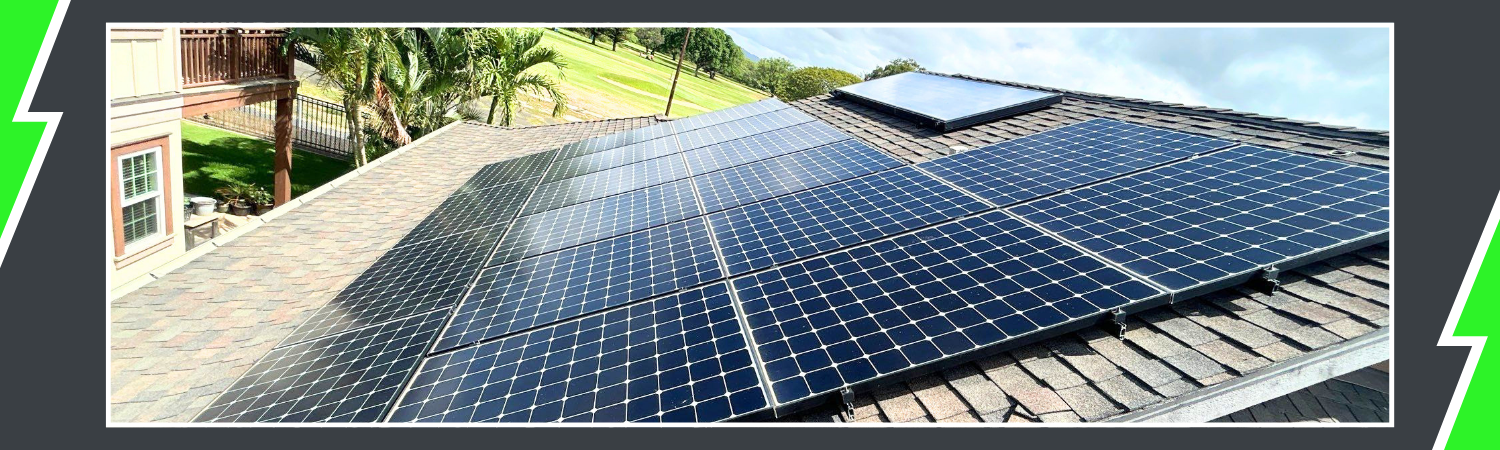
Solar panels in Hawaii typically last 25 to 30 years of useful service, and the limiting factor is almost never the silicon. Modules are typically warrantied for 20 to 25 years, and a median panel degrades about 0.5% per year, leaving roughly 90% of its original output at year 20, according to the National Renewable Energy Laboratory. That is a slow fade, not a failure point. NREL notes there is no real end date for a panel’s productive life, because a module at 80% output is still a working module. In practice, Hawaii systems are replaced or repowered when the inverter generation is obsolete, the roof underneath needs work, or the household’s energy needs have outgrown the array, not because the panels stopped producing.
What Is Panel Degradation, and How Fast Does It Happen?
Panel degradation is the gradual loss of rated output caused by microscopic changes in the cells, encapsulant, and interconnections. It happens in two phases. The first year carries a larger one-time drop, usually 1% to 2%, from light induced degradation as the cells stabilize. After that, the annual rate settles into a steady line. Premium modules now beat the historical average by a wide margin: REC guarantees more than 92% of nameplate power in year 25 at a 0.25% annual degradation rate, per its 2025 Alpha Pure-R datasheet. Humidity accelerates one specific mechanism, potential induced degradation, which is voltage leakage through the module encapsulant, so anti-PID construction matters more in Hilo or Hana than in a desert climate. The Photovoltaic Modules we install are selected partly on that specification.
How Long Do Solar Panels Last Once Degradation Is Factored In?
Run the math on a typical Hawaii array and the picture is reassuring:
- Year 1: about 98% of nameplate output after initial stabilization
- Year 10: roughly 95% on a premium module, about 92% at the industry median rate
- Year 20: roughly 93% on a premium module, about 90% at the median rate
- Year 25: more than 92% under a strong performance warranty, closer to 87% at the median
- Year 30 and beyond: still producing, typically in the mid-80s as a percentage, with no warranty backing
Compare that to payback. The average Hawaii solar homeowner reaches payback in about 9.6 years and saves roughly $57,395 across 25 years, based on EnergySage data updated September 2026. The panels keep working for fifteen-plus years after they have already paid for themselves.
What Actually Ends a Solar Panel’s Life in Hawaii?
What ends a solar panel’s life in Hawaii is usually physical, not electrical. Frame corrosion at the corner joints, moisture intrusion past a failed junction box seal, delamination of the backsheet under constant UV and humidity, and cracked cells from an impact or a bad walk on the array are the real culprits. Salt air drives the first two, which is why coastal certification and sealed construction matter so much here. Hawaii’s climate is gentle in one important respect, though: there is no freeze-thaw cycling, no snow load, and no hail season, three of the biggest stressors on mainland arrays. A well-specified Hawaii panel faces a narrower set of threats than a Midwest panel does, and those threats are addressable with inspection. Our Solar Maintenance & Repair team finds most of them at the frame and connector level, years before they cost a homeowner production.
Which Parts of the System Wear Out Before the Panels Do?
The inverter almost always wears out before the panels do. Most string inverter technologies carry warranties of about 10 to 12 years, while microinverters and power optimizers often carry 25-year warranties, and monitoring or communications equipment is typically capped at 5 years, according to EnergySage. That means a homeowner with a central string inverter should plan on one replacement during the panels’ life and budget for it from the start. Connectors, grounding lugs, and roof-attachment flashing are the other wear items, all inexpensive to service and expensive to ignore. Batteries follow their own, shorter cycle. Plan the system around three separate timelines, and a 30-year array stops feeling like a gamble.

What Happens at the End of a Panel’s Life?
At the end of a panel’s life a Hawaii homeowner has three options, and only one of them is replacement. The first is to do nothing, because a module at 85% output is still displacing electricity at the highest rates in the nation. The second is repowering, in which the original panels come off and higher-wattage modules go back on the same racking and roof penetrations, often adding 40% or more capacity in the same footprint. The third is full removal, which is also what happens when the roof underneath reaches the end of its own life first. A professional Solar Panel Removal keeps the array intact for reinstallation and protects the roof warranty, which matters because on many Hawaii homes the roof needs attention a decade before the panels do.
Frequently Asked Questions
Do solar panels stop working after 25 years?
No. Twenty-five years is the typical performance warranty term, not an expiration date. A panel at the end of its warranty is usually still producing 85% to 92% of its original output and will keep producing for years afterward. Systems are normally retired for roof work, inverter obsolescence, or capacity upgrades rather than panel failure.
Does Hawaii’s climate shorten solar panel lifespan?
It changes the failure modes more than the lifespan. Salt air and humidity attack frames, seals, and connectors, and high heat reduces daily output, but Hawaii has no freeze-thaw cycling, snow load, or hail. Panels certified for salt mist corrosion and built with anti-PID construction hold up very well in island conditions.
What is a normal solar panel degradation rate?
The median module loses about 0.5% of its output per year according to the National Renewable Energy Laboratory, with a larger one-time drop of 1% to 2% in the first year. Premium modules now guarantee rates as low as 0.25% per year, which leaves more than 92% of original output at year 25.
Will I need to replace my inverter before my panels?
Most likely yes if you have a central string inverter, since those typically carry 10 to 12 year warranties. Microinverters and power optimizers commonly carry 25-year warranties and often last as long as the panels. Budgeting for one inverter replacement is the standard approach for a 25-year system.
How Long Do Solar Panels Last: The Practical Answer
How long do solar panels last comes down to how they were specified and how they are maintained. Choose modules built for salt air and humidity, expect a slow and predictable fade rather than a failure, plan for one inverter replacement, and keep the roof beneath the array in good shape. Do those four things and a Hawaii system comfortably outlives its payback period several times over. ProVision Solar has serviced island arrays for more than 25 years and can tell you exactly where your existing system sits on that curve. Contact Us Today for a system evaluation or a new design built to last.
Information pertaining to laws, regulations, or incentives is accurate at the time of writing this content. However, regulations and systems can change at anytime.