
How many solar panels do I need on Oahu is the first concrete question most homeowners ask, and on this island the answer has an extra wrinkle the neighbor islands do not. Beyond your electricity use and your neighborhood’s sunshine, Oahu’s crowded distribution grid can shape how large a system your circuit will accept and which utility program it enrolls in. A home in Ewa Beach or Kapolei sits under dry, bright leeward sun. A home in Kaneohe, Kailua, or upper Manoa sees far more cloud and rain. The panel count differs, and so does the design around it. The math itself is simple once you know three numbers: your monthly usage, how much sun your part of Oahu delivers, and how much power each panel makes. ProVision Solar has installed solar across Hawaii since 1998, and this guide walks through the calculation so you can sanity-check any quote.
How Many Solar Panels Do I Need on Oahu for a Typical Home?
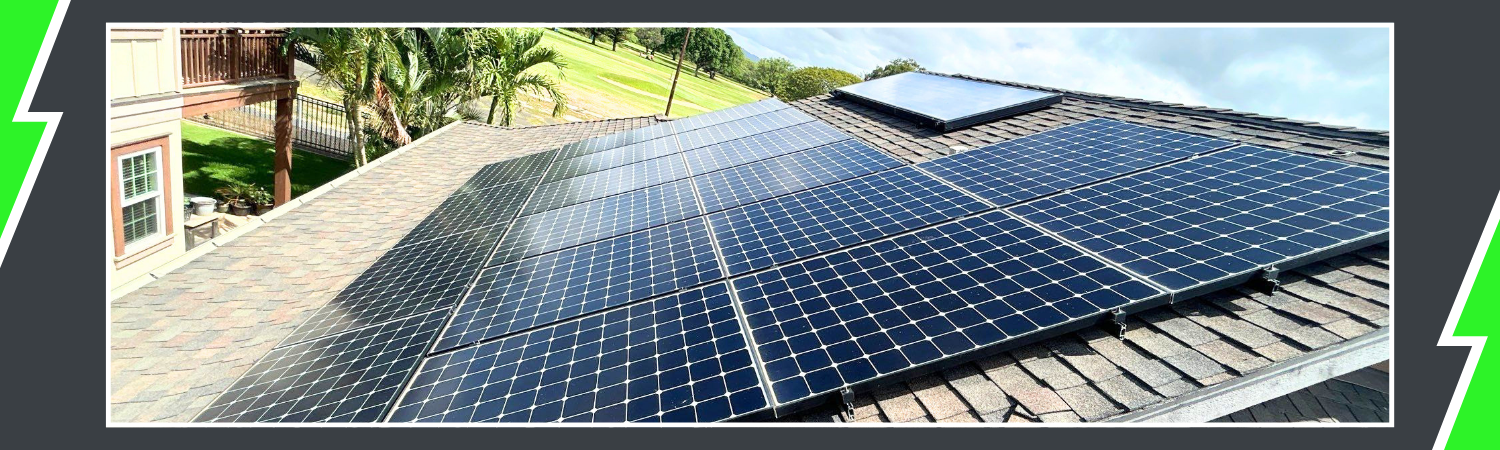
How many solar panels do I need on Oahu comes down to a range of roughly 10 to 18 panels for a typical household, with leeward homes at the low end and windward or valley homes at the high end. Hawaii homes use less electricity than the national average, roughly 500 to 550 kilowatt-hours per month for a typical residential customer, per the U.S. Energy Information Administration, because few homes have central heating and many rely on trade winds instead of air conditioning. Oahu households that run air conditioning through Ewa and Kapolei summers, charge an electric vehicle, or house an extended family in one home sit well above that figure, and each of those loads adds panels to the answer.
The Math Behind How Many Solar Panels Do I Need on Oahu
The calculation behind how many solar panels do I need on Oahu takes four steps, and you can run it with your own Hawaiian Electric bill:
- Daily usage: divide your monthly kilowatt-hours by 30. A 550 kWh month is about 18 kWh per day
- Local sun hours: the leeward plain from Ewa to Waianae and the south shore average roughly five and a half peak sun hours per day over a year; windward communities such as Kaneohe and Kailua and the wetter valleys run closer to four and a half
- System size: divide daily usage by sun hours, then add about 20 percent for real-world losses from wiring, inverters, heat, and cloud. 18 kWh divided by 5.5 hours, plus 20 percent, is roughly a 4 kW system; the same usage at 4.5 hours is about 4.8 kW
- Panel count: divide system size by panel wattage. At 400 watts per panel, 4 kW is about 10 panels and 4.8 kW is about 12; higher-wattage panels reduce the count
That two or three panel spread for the same household is why a quote built on a statewide average can miss on Oahu in either direction.
Why Does Your Oahu Neighborhood Change the Answer?
Your neighborhood changes the answer in two ways. The first is weather: Oahu’s leeward side is among the sunniest places in the state, while the windward side and the back of the valleys catch the trade wind showers that keep the Koolau range green. The second is the grid. Oahu carries more rooftop solar than any other island, and Hawaiian Electric reviews each new system against the capacity of the circuit serving the neighborhood. On some circuits that review shapes the system size or steers the design toward a non-export program with a battery, which affects how the panel count is set. Roof orientation and shading add a third layer, since a south or west facing roof captures the most afternoon sun and a neighbor’s second story can shade an array for hours. Every Oahu Home Solar Installation from ProVision Solar starts with a site visit and a circuit check, then uses production data specific to your part of the island.
Does a Battery Change the Panel Count?

Yes, and on Oahu it usually adds panels. Hawaii closed its Net Energy Metering program to new applicants in October 2015, per the Hawaii Public Utilities Commission, so new systems earn less for exported power than they save by storing and using it at home. On many Oahu circuits a battery is also what allows the system to enroll at all. A storage-based design works best when the array produces enough surplus during the day to fill the battery for the evening, which typically means sizing somewhat above the daytime load, especially for households whose consumption peaks after sunset with cooking, lighting, and air conditioning. The battery itself is sized separately, based on which loads you want protected during an outage.
What If You Already Have Panels and Need More?
Many Oahu homeowners installed solar years ago and have since added an electric vehicle, air conditioning, or an ohana unit, and their panel count no longer keeps up. Expanding is common, though on Oahu it depends on three things: your inverter’s remaining capacity, your circuit’s capacity, and your current utility program, since adding capacity to an older Net Energy Metering system can affect that agreement. Our Oahu Solar System Upgrades service evaluates your existing array, roof space, and interconnection before recommending how many panels to add and whether a battery belongs in the upgrade.
Whatever the count, Hawaii’s electricity rates run roughly three times the national average, per the U.S. Energy Information Administration, so each panel on an Oahu roof offsets some of the most expensive residential power in the country. Learn more on our Oahu Solar Installation page, or Contact Us Today for a free sizing assessment based on your actual bills.
Frequently Asked Questions
How many solar panels does an average Oahu home need?
Most Oahu homes need roughly 10 to 18 panels. A typical household using about 500 to 550 kilowatt-hours per month lands near 10 to 12 panels on the sunny leeward side and 12 to 14 on the windward side or in the valleys, at 400 to 430 watts per panel. Air conditioning and electric vehicles push the count higher.
Do windward Oahu homes need more panels than leeward homes?
Usually, yes. Trade wind showers and cloud in Kaneohe, Kailua, and the valleys reduce annual production per panel compared with Ewa or Kapolei, so designers add two or three panels to reach the same output. A site-specific production estimate is more reliable than an island-wide average.
Can my Oahu circuit limit how many panels I install?
It can influence the design. Hawaiian Electric reviews each system against the capacity of the circuit serving the neighborhood, and on saturated circuits that may shape system size or steer the design toward a non-export program with a battery. An installer checks your circuit before finalizing the panel count.
Can I install fewer panels now and add more later on Oahu?
Yes, provided the inverter has capacity, the circuit allows it, and the utility interconnection permits the addition. Planning for expansion at the start keeps the later upgrade simpler and less expensive.
Get a Panel Count Built on Your Real Bills and Your Real Circuit
How many solar panels do I need on Oahu has a precise answer once someone looks at twelve months of bills, your roof, your neighborhood’s sun, and the circuit that serves it. ProVision Solar has done that math across Oahu since 1998, and we will show you the calculation, not just the number. Contact Us Today for a free assessment.
Information pertaining to laws, regulations, or incentives is accurate at the time of writing this content. However, regulations and systems can change at anytime.