![ProVisionSolar_White-Green[2]](https://provisionsolar.com/wp-content/uploads/2018/06/ProVisionSolar_White-Green2.png "ProVisionSolar_White-Green[2]")
EV charging with solar in Hilo usually means adding somewhere between four and eight panels to a home system, depending on how far you drive and how much sun your roof actually sees on the east side. An electric vehicle is the single largest new load most Hilo households will ever add, larger than a heat pump water heater and often larger than air conditioning. It is also the load that pays back fastest, because Hawaii electricity rates run roughly three times the national average, per the U.S. Energy Information Administration, which makes every mile driven on utility power expensive and every mile driven on your own rooftop nearly free. ProVision Solar has been sizing systems out of Hilo since 1998, and this guide covers how to plan for the car properly rather than discovering the shortfall on your first electric bill.
How Does EV Charging With Solar in Hilo Work?

EV charging with solar in Hilo works by producing enough extra daytime energy to cover the kilowatt hours your car consumes, then either using that energy directly while the car charges or exporting and drawing it back depending on your interconnection arrangement. The math is simpler than most people expect. A typical electric vehicle travels roughly three to four miles per kilowatt hour, per the U.S. Department of Energy’s Alternative Fuels Data Center, and most home charging happens overnight in a garage or carport. Multiply your monthly mileage by that efficiency figure and you have the extra load your Hilo solar system needs to carry.
What EV Charging With Solar in Hilo Adds to Your Monthly Load
Here is how the extra load stacks up for common Hilo driving patterns, using roughly three and a half miles per kilowatt hour:
- Short commute, around 500 miles per month: roughly 140 kilowatt hours added
- Average driving, around 900 miles per month: roughly 260 kilowatt hours added
- Long commute, Hilo to Waimea or Kona regularly, 1,400 miles per month: roughly 400 kilowatt hours added
- Two electric vehicles in one household: commonly 400 to 700 kilowatt hours added
For context, a typical Hawaii household uses roughly 500 to 550 kilowatt hours per month before any vehicle charging, per the U.S. Energy Information Administration. An average commute can therefore increase household consumption by half again, and a two car electric household can nearly double it.
How Many Extra Solar Panels Does an EV Add in Hilo?
Most Hilo drivers need four to eight additional panels to cover an electric vehicle, and heavier drivers need more. The reason Hilo numbers run higher than dry side numbers is cloud cover. East Hawaii sits under substantially more rain and overcast than the leeward side, with Hilo receiving well over 120 inches of rain in an average year, per the National Weather Service. A panel in Hilo produces real, reliable energy, it simply produces somewhat less annually than the same panel above Kona, so honest sizing on the east side uses local production data rather than statewide averages.
The other variable is your roof. Some Hilo lots have generous unshaded south facing area and some are hemmed in by albizia and mango canopy. When roof area is tight, the conversation shifts toward higher output modules, a second roof plane, or a ground mount. This is exactly the kind of sizing question our team works through during a site visit for a Hilo Home Solar Installation.
Should You Charge Your EV During the Day or Overnight in Hilo?
Charging during daylight hours is the most efficient option for Hilo solar owners, because the energy flows straight from your roof to your car without any round trip through the grid or a battery. If someone in the household is home during the day, or if the car sits at home on weekends, setting the charger to run midday captures the most direct value from your array. Many home chargers and most electric vehicles allow scheduled charging windows, so this takes one setup and then runs itself.
Overnight charging still works well, it simply depends on how your system is interconnected and whether you have storage. Hawaii closed Net Energy Metering to new applicants in October 2015, per the Hawaii Public Utilities Commission, so newer systems operate under programs that treat exported and imported energy differently than the original arrangement did. That is the single most important thing to understand before assuming overnight charging is free. An installer who serves East Hawaii daily will explain exactly how your interconnection option handles this. You can also get in touch with our team to walk through the options for your address.
Do You Need a Battery for EV Charging With Solar in Hilo?
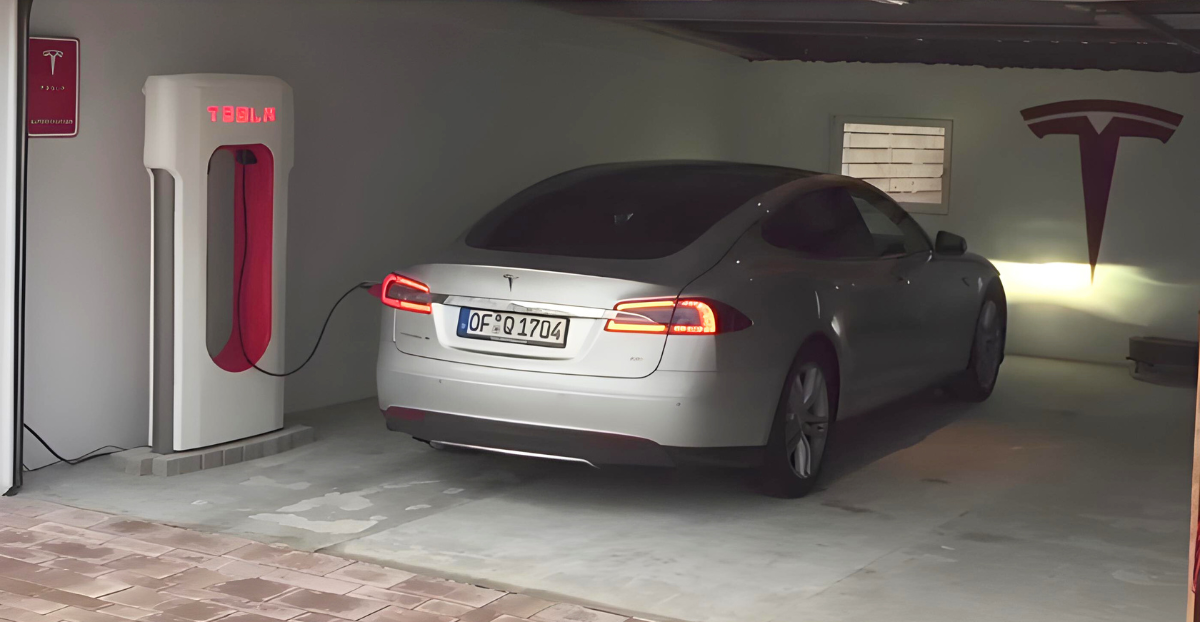
A battery is not required to charge an electric vehicle with solar in Hilo, but it changes what is possible. Without storage, daytime production covers daytime charging and anything you draw overnight comes from the utility. With storage, the excess your roof makes at midday is held and released in the evening, which lets you charge the car after work on energy you generated yourself. A Tesla Powerwall 3 stores 13.5 kilowatt hours and delivers 11.5 kilowatts of continuous power, per Tesla, which is meaningful next to the 20 to 40 kilowatt hours a typical week of Hilo driving consumes.
Storage also matters for a reason that has nothing to do with cost. East Hawaii sees outages from storms, high wind, and downed lines, and a household that depends on an electric vehicle for work or school transport has a real interest in being able to charge when the grid is down. Sizing a battery for both house and car loads is a different exercise than sizing it for the house alone, and it is worth being explicit about that with your installer up front.
Can You Add EV Charging to a Solar System You Already Have?
Yes, and adding capacity to an existing Hilo system is common. If your original array was sized for household use before you bought an electric vehicle, you are likely watching your bill creep back up. The fix is usually an expansion: additional panels on available roof area, sometimes a new inverter or an additional string, and occasionally an electrical service upgrade if the main panel cannot accommodate a dedicated charger circuit.
Expansions need to be planned against what is already installed, because inverter capacity, string configuration, and interconnection approval all constrain what can be added. An older system may also be a good candidate for module or inverter upgrades at the same time. ProVision Solar handles this work through Hilo Solar System Upgrades, including on systems originally installed by other companies. Solar panels commonly carry 25 year performance warranties, per EnergySage, so a well built older array is usually worth expanding rather than replacing.
Frequently Asked Questions
How many solar panels does it take to charge an electric car in Hilo?
Most Hilo households need four to eight additional panels to cover one electric vehicle. The exact number depends on monthly mileage, the vehicle’s efficiency, and how much sun your specific roof receives given the cloud cover on the east side of the Big Island.
Is it cheaper to charge an EV with solar than with utility power in Hawaii?
Substantially cheaper. Hawaii has the highest average electricity rates in the country, so the difference between charging on utility power and charging on rooftop production is larger here than in any mainland state.
Does cloudy Hilo weather make solar EV charging impractical?
No. Hilo systems produce reliably year round, they are just sized using local sun hours rather than dry side numbers. That usually means adding a panel or two more than a Kona home would need for the same driving.
Can I charge my electric vehicle during a power outage?
Only with battery storage and a properly configured backup system. Grid tied solar without storage shuts down during an outage for safety reasons, so charging a vehicle through an outage requires a battery sized for both household and vehicle loads.
Plan the Car Into the System From the Start
EV charging with solar in Hilo is straightforward when the extra load is planned for rather than discovered later. Size for the miles you actually drive, account for east side sun hours honestly, and decide early whether storage belongs in the design. ProVision Solar has been sizing East Hawaii systems since 1998 and can model your driving into the design before anything is ordered. Learn more on our Hilo Solar page, or Contact Us Today to talk through sizing for your vehicle.
Information pertaining to laws, regulations, or incentives is accurate at the time of writing this content. However, regulations and systems can change at anytime.